Categories
Blogs Resources

Money for Nothing and Care for Free

Who said Care will be free in our old age, this is not a Dire Straits song…., this is the real song of life i.e. no money no care, unless it’s State sponsored….

India is an ageing nation which means the dependency ratio of non-working people in comparison to working folks is going to increase. As a result, the social welfare budget will also have to increase proportionately to take care of the non-earning citizens, but then, are we even looking in that direction?

The larger point of debate is, who will take care of the older people when we actually become an Aged nation? Will it be the centre responsibility or will it continue to be the state prerogative?

I am sure all the panel discussions and fine dining will result in some positive outcomes, the bigger question is for whom?

To impact and ensure that the bottom of the pyramid are included in the growth trajectory of the nation, it is critical that all citizens have the same basic rights similar to the privileged class which are available and accessible, otherwise it will become a challenge to handle the situation when it gets blown out of proportion.

There is no denying the fact that over the past 10 years there has been a lot of development in the rural areas but then, it is critical to keep developing and finding sustainable solutions. Having the latest mobile phones and making social media reels is not real development. As a society we need to become more inclusive and understand the needs and demand of the Ageing population.

Pankaj Mehrotra
Categories
Blogs Resources

Best location for an Elderly Care Home

What is the best location for an Assisted Living Facility (Old Age Home/ Care Home/ Senior Living Facility)? In my opinion the answer is simple, 1) Access to hospital, 2) access to social & recreational avenues and 3) accessibility by staff to reach.

The graph of Ageing is extremely dynamic, once the health starts going downhill then it becomes a long drawn battle to win the war.

The advancement of medical science is such that, medicines don’t let us die and the physical and psychological ailments do not let us live, as a result visits to hospitals become regular.

While on one hand the picturesque hospital corridors and waiting rooms are much better in the today’s time, yet they are not the preferred tourist destinations for a weekly package tour.

The saving grace or something to look forward to after a hard day’s work of visiting various departments in a hospital is the canteen food. Luckily they serve different food to visitors and patients.

On a serious note, waiting outside a doctor’s chamber for consultation is like waiting for the school exam paper to be opened by the teacher, the nervousness of what the questions will be and if we will be able to pass the exam or not.

As India’s Elderly population is expected to grow exponentially it will become important for healthcare service providers to become more sensitive in handling the Silver generation, because statistically one on five people will be above the age of 60 years.

Pankaj Mehrotra

Categories
Blogs Resources

Accessibility Standards or Formality?

The need for Accessibility Standards is no remote island to discover, yet as a nation we are still struggling in the 21 Century to understand its importance.

While we have well defined guidelines for almost every area of Spatial Planning, but then, do we have the intention to implement such recommendations?

What most of us ignore is that, accessible infrastructure is not only for Older People and people with special needs, it impacts all of us. Be it our schools, hospitals, offices, metro stations, railway stations we all visit these places and are directly affected by the planning.

In my opinion the most important area for accessibility is the approach to transportation systems, because without accessible travel it gets difficult for people to move out of their neighborhood as their movement gets restricted to their own house or probably the neighborhood parks.

The larger point of debate is, while the metro and railway stations are accessible but then the approach to reach them are mostly unplanned or inaccessible.

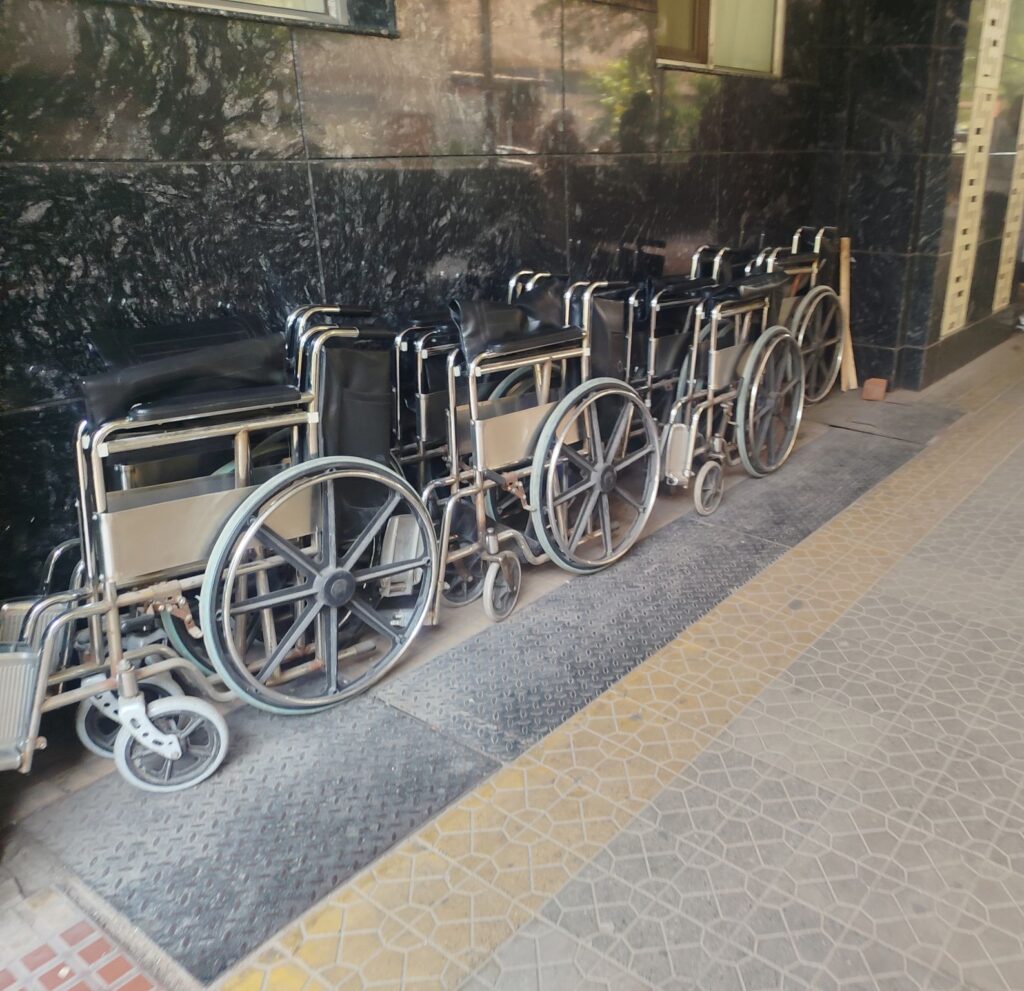
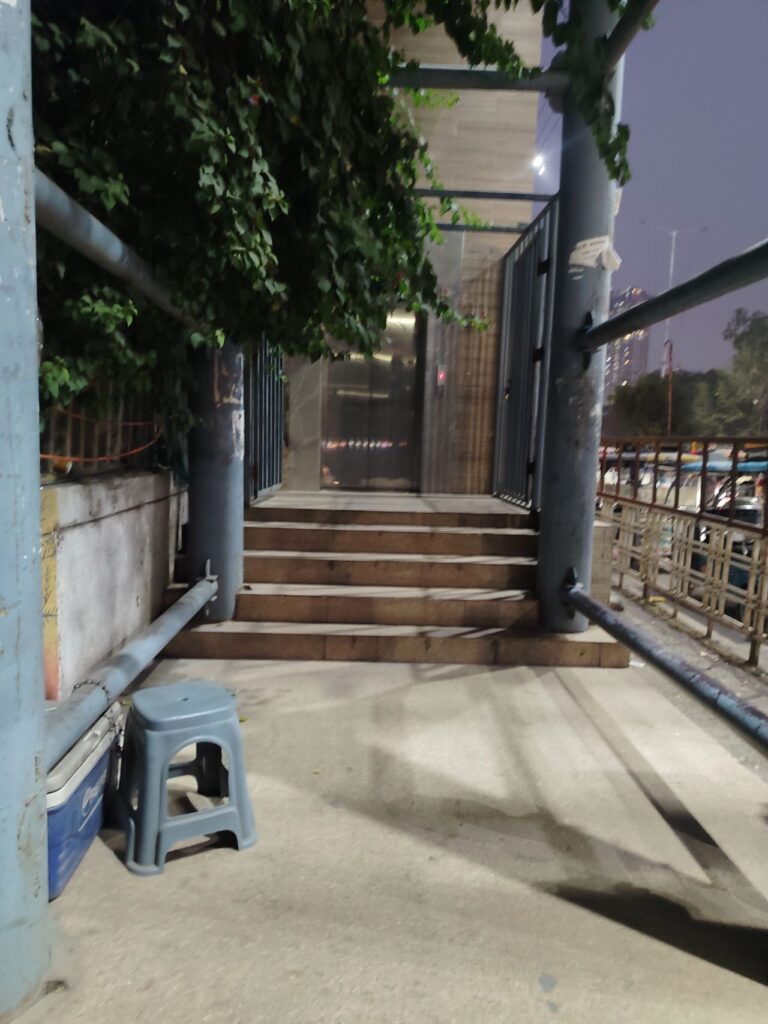
Sharing a picture of the approach to the lift of a metro station as an example, while it’s great to have operational lifts in public places in India that too with minimum grafite and beetle nut stains, however the question of users civic sense is still a question mark.

It is easy to blame the system for lack of planning or unplanned development, but then are we citizens not a part of the country? Till when will we remain armchair critics without lifting a finger and not participate in the larger landscape to do our part?

Pankaj Mehrotra

Categories
Blogs Resources

Older Age Bipolar Disorder (OABD)

Older age bipolar disorder (OABD) refers to patients with bipolar disorder aged 50 years and over.

OABD forms a special more complex subgroup of bipolar disorder, with prevalent cognitive deficits, increased risk of dementia, impaired psychosocial functioning, frequent physical comorbidities, and premature death.

There are several factors associated with aging that also negatively influence outcome, such as decreasing social network size, loss of support from friends and family members, lifestyle choices, reduced mobility, increased presence of poor physical health, and other aging-related issues (source:National Institutes of Health).

The larger point of debate is, what is the general awareness in our country about such topics. Sometimes many of us take out our negative thoughts on other people even when we don’t mean it, could that be due to bipolar issues?

Depression, bipolar, schezophenia and overall mental health are extremely important areas for support, especially for those who are living with it and have no access of support systems.

Assessment methods for daily functioning in OABD are sparse, as many commonly used scales are not specifically designed for OABD. However, the Functioning Assessment Short Test for Older People (FAST-O) offers the opportunity to assess the current level of functioning in the OABD population.

Though I am not qualified or have much knowledge about this subject, however in my opinion as India is ageing fast, it will become imperative to start the research and develop practical and simple solutions.

Pankaj Mehrotra

Categories
Blogs Resources

Sense of Humour and Ageing

Do we lose our sense of humour because we get Old or do we get Old because we lose our sense of humour?

Most people say that they are young at heart but then in reality, are they? How many of us still do childish things as part of our ageing process, do we not grow out of the shoes of yesteryears and justify our past actions and mindset as being young and naive?

Surprisingly the people who seem to remain looking young and actually young at heart are the ones who don’t seem to have a chip off their shoulder or are uptight about life, for them, the happiness of cooking life is more important than struggling to find the perfect recipe of living a successful life.

The future of Aged Care in India is an interesting space to watch, not because others will get old, it’s because the nation is getting older and probably there’s no turning back the clock.

The past 5 years has seen a dramatic change in the mindset of children and parents both, I guess that’s how societies evolve. Today many middle aged people are openly talking about their Golden Years, something which they were not comfortable talking with their children till a decade ago.

Retirement Homes, Care Homes, Intellectual Companionship, Dementia Care / Memory Care, Rehabilitation Care, Mental Health is becoming acceptable and part of social discussions.

The larger point of debate is, while on one hand, the private sector is galloping to catch the cash cow called Elderly, but then what happens to the people at the bottom of the pyramid; do they become collateral damage in the game called National Policies and Legislative Acts?

Coming back to the subject of Humour and Ageing, in my opinion, both have their own spiritual outlook. Spirituality teaches how to let go of unwanted stress and learn the art of humour and balance while Ageing teaching us that at the end of the day it’s the people who can see stress under the lamp of humour probably handle life better.

But then as they say, most of us don’t have a sense of humour to understand our humorous life….

Pankaj Mehrotra

Categories
Blogs Resources

What is Geriatrics and what should we know about it?

Ageing is an inevitable, progressive and generalized impairment of functions, resulting in loss of adaptive response to stress and increases the risk of age related diseases. But the most positive aspect of ageing is that it is involved with psychological growth in capacities for strategy, decision making, prudence, wisdom, reasoning and experience.

Read the full post by Dr. Dipankar Debnath

The document “What is Geriatrics” can be downloaded here or can be viewed below

Categories
Blogs Resources

Reverse Mortgage – A good concept but non-starter

Reverse Mortgage was launched in India with a lot of fanfare but unfortunately the scheme was a non-starter and could not meet it’s intended objectives.

The concept of Reverse Mortgage was conceptualized internationally to help senior citizens who are asset rich but cash poor.

The objective of this scheme is to help elders remain in their own homes at the same time, earn from the property till they are alive.

Some key points of the scheme are;

1) Periodical payments or a lump-sum for a maximum period 20 years.
2) Borrower(s) continue to stay in the house till they are alive or permanently move out of the house.
3) Borrower is not required to service the loan during his/her lifetime.
4) Loan amount is dependent on the value of house, age of borrower(s) & prevalent interest rate.
5) Loan amount may be used by the borrower for varied purposes including up-gradation/ renovation of residential property, medical exigencies, etc.
6) No capital gains tax

The larger point of debate is, why was Reverse Mortgage not accepted by the industry and by senior citizens themselves.

I guess the following reasons can be attributed depending upon the lender:

1) Only max 50% lump sum or max 15 lakhs
2) Max monthly receipt capped at ₹50,000/-
2) Typical loan amount given by the bank is 60-80% of house value
3) Maximum loan between 75 Lakhs – 2 crores
4) Very low loan amount from low value properties
4) Total interest payment to be paid to bank comes to 50-55% of the loan amount received
5) House should not be older than 20 years
6) 2-3% more expensive than normal home loan.

To conclude, Reverse Mortgage is a great concept which needs to be taken back to the drawing board, revised and updated for the benefit of Older People in India.

Pankaj Mehrotra

Categories
Blogs Resources

Senior Citizens Demographics in India

Elderly population is no more an insignificant number in the larger landscape of India, they are now a sizeable force to be reckoned with.

While there are numerous projections as to how 1 in every 5 Indians will be above 60 years by 2050, but then are we prepared to handle such a large population boom of Older People in the next 25 years?

The dynamics of Indian family structure will drastically change in the next 20 years, as a result there will be more Elderly living alone, especially older women.

The larger point of debate is, are these population demographics meant only for the census data or we do we see them as living beings who need and will need care?

India has approximately 1 Lakh Senior Citizen Care Homes Beds (0.10 million) for a Elderly Population of 140 million, which means there is 1 Bed for every 1400 senior citizens.

The stark reality is that, if as a country we do not start creating infrastructure and facilities which can cater to the growing population of Senior Citizens then we may have a big task at hand at a later date.

Today’s reality is tomorrow’s future which will not only affect the poor and underprivileged but also the middle class and the rich.

Pankaj Mehrotra

Categories
Blogs Resources

Dear Dementia – Did you forget the Toast in the Toaster?

Hello Dementia, I hope all is well at your end, while it would have been nice to hear from you, but you are one friend who is not really welcomed, yet you have a way to gate crash the party.

Last time I met you was with my uncle, somehow he seemed to like you to the extent that he even forgot his family and friends only to be with you.

I remember how my uncle used to sneak out of the house only to be alone with you but unfortunately it used to give us nightmares looking for him on the streets.

You have a funny way of friendship, you turn some people aggressive while some become subdued, I think it’s not a good habit.

What type of a friend you claim to be, your friends eat their food and don’t even recall, they go to the washroom and then forget, again that’s not how a good friend should behave.

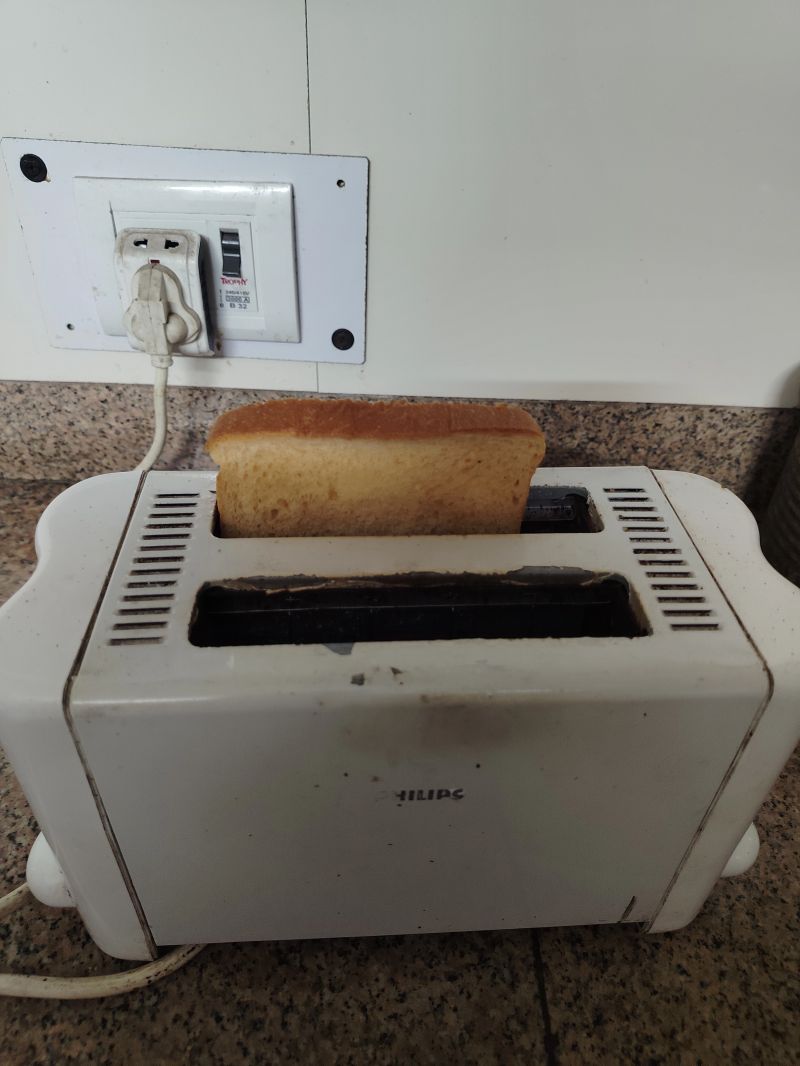
Dear Dementia, last time I saw a glimpse of you trying to enter my house uninvited, please understand you are not really welcomed, I saw one toast still left in the toaster, was that you?

Please be advised, your habit of barging into people’s lives without notice is not appreciated, it will be helpful for us as a family if you could give advance notice so that we are prepared to handle your tantrums and difficult nature.

Pankaj Mehrotra

Categories
Blogs Resources

Art of Dying or Fear of Dying

We all spend tons of money on learning how to live and be happy, but seldom do we think about learning the Art of Dying.

The larger point of debate is, is Dying an Art or a Science?

Death and Dying are the two most fearful words in life, yet we don’t want to read the chapter about Dying, fortunately or unfortunately it’s the concluding chapter of the same book.

I don’t know how many people have faced Death? But then Google is there to give insights about how people’s mindset changes after meeting Death face to face.

Dying is no different from living; some of us die everyday and probably every minute, yet we get up the next morning to do the 9-5 rat race.

A few live a living death, whilst most people see death as the other side of the coin and keep playing the Russian roulette, to be honest, I don’t know who is right or wrong.

When death comes calling it’s an invitation to the beginning of the end, yet we fear it so much that we don’t let go of the breath, I guess that’s the connection between Life and Death.

Death is like the fear of bungee jumping or being claustrophobic or falling from the sky without a parachute, but then if one has faced near death, then I guess our outlook towards life changes…

When we leave the physical body we feel fear, which is natural as part of human nature, but then the difference between Human fear and Animal Fear is different. It’s the consciousness and the guilt which makes mortal humans fear death because animals do not overthink about Death and Dying..

Do we fear Death due to the pain associated with it or do we fear the pain associated with Death especially leaving our loved ones without taking care of them? I guess it’s the fear of leaving our parents and our children and not knowing how they will survive without us…

Death is typically seen as an end to our pitiful lives, but then, is Life possible without Death?

Death is beautiful because it’s a new journey to the unknown yet most of us fear the unknown, but then, we typically associate the unknown with fear and Death..

What if, dying was a choice and a free will? I wonder how many people would choose between Life and Death?

Pankaj Mehrotra