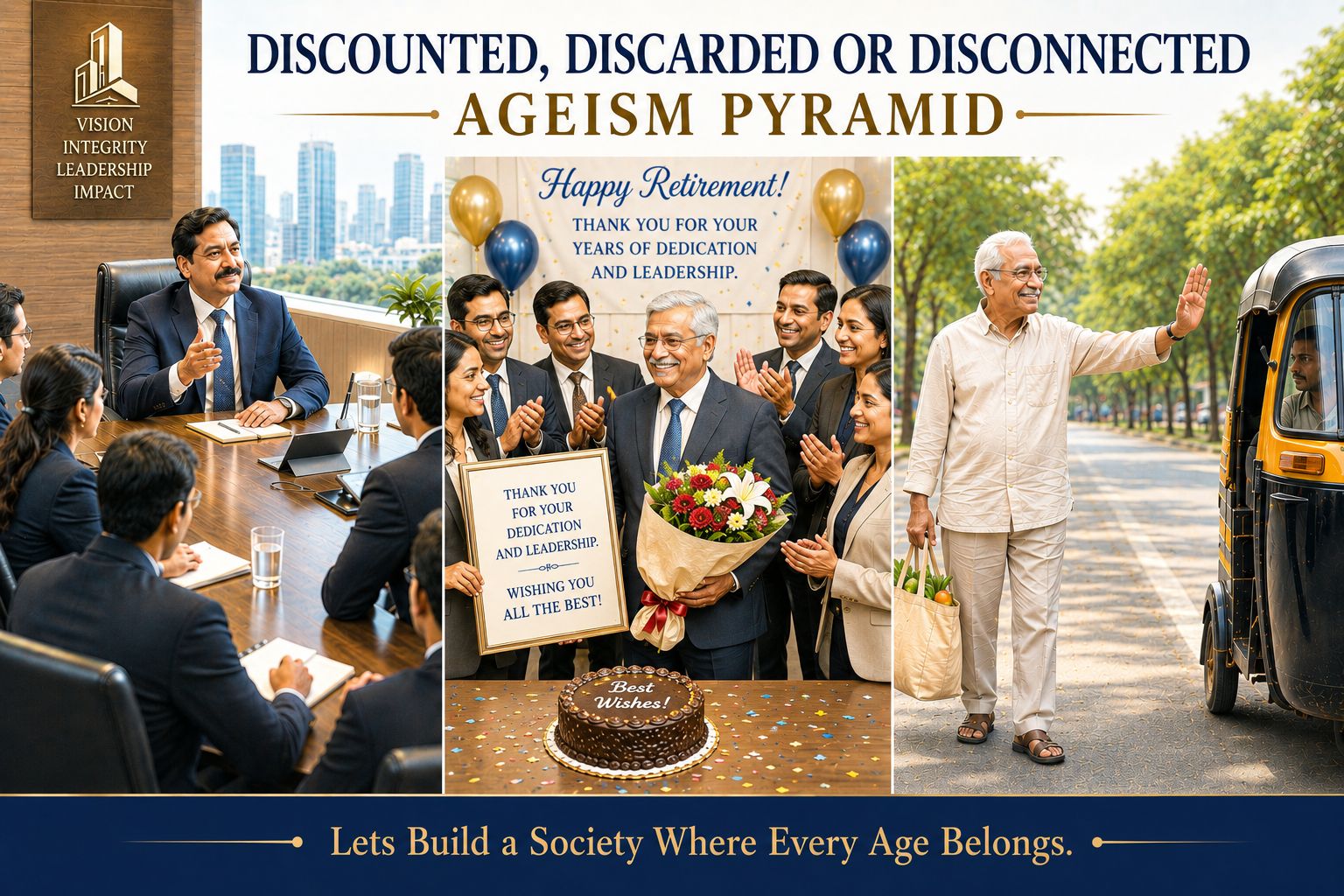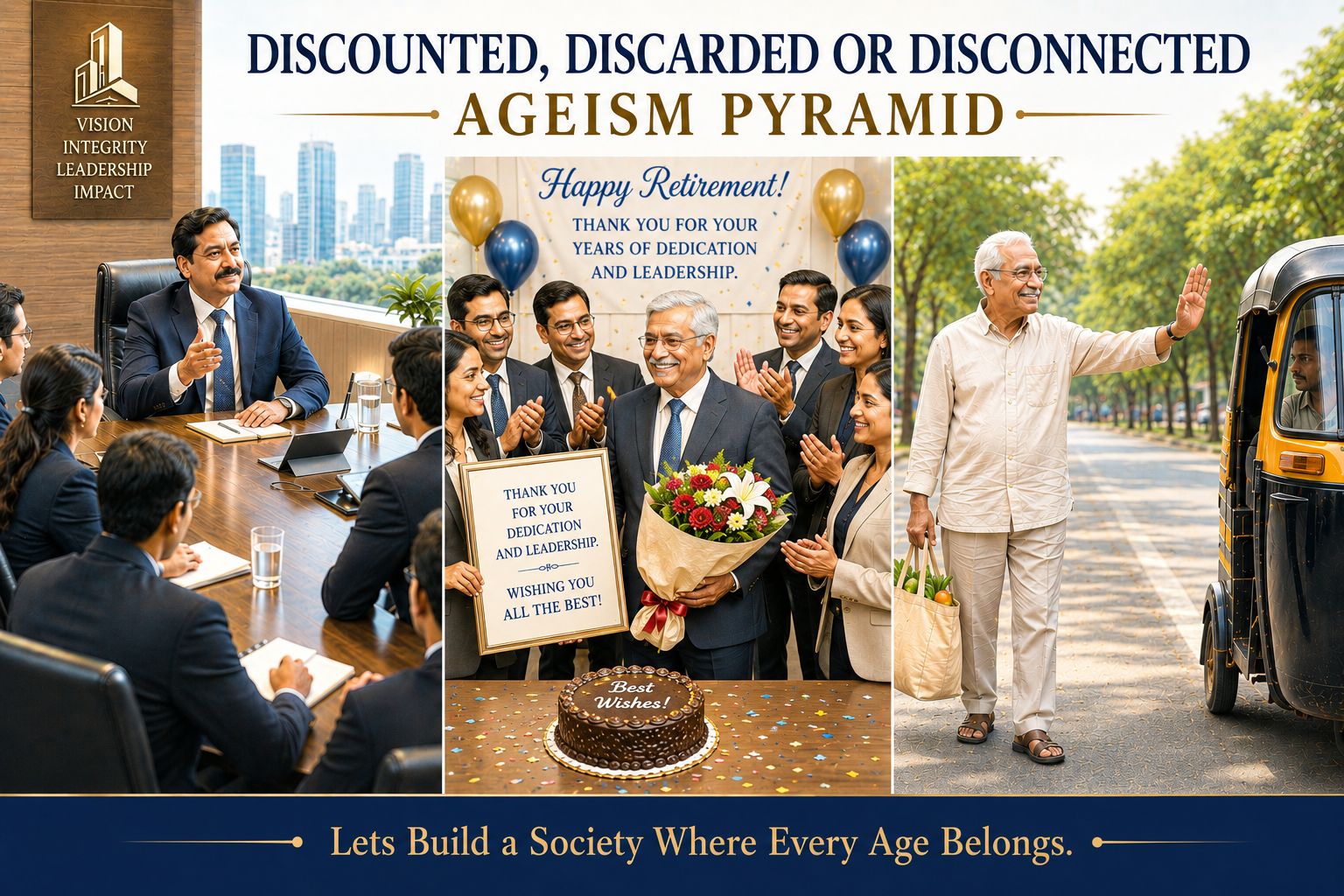
The ageing process is always in a transitioning stage, which eventually bursts out like a volcano only to calm down later. At one stage in life we are like the king or queen but then suddenly we become the so-called common man. I guess it's to do with the power of the chair and the value of the signature.
Many senior citizens tend to have withdrawal symptoms when they realise that they are no longer in the driver's seat. To be honest sooner we all realise and accept this fact, it's better for us.
The point of debate is, while on one hand longevity is increasing and people are working longer, the question is, then why as a society do we look at Older People with the lens of Ageism?
Technically the dependency ratio might be increasing (i.e number of economically inactive individuals compared to the number of active, employed workers), however the fact of the matter is, many seniors above the age of 65 are still active and contributing.
Though the last census happened in 2011 and even after 15 years we are all working on the projections, however if one has to go by the projected numbers, then it is obvious that Senior Citizens will become the largest population group which will require state sponsored support.
While there are multiple Central and State pension schemes for the poor and below poverty line citizens, but then, what happens to the middle class seniors?
The entire economics and welfare of Elderly Care is no longer a subject which can be brushed under the carpet, these are numbers which will have serious implications if stakeholders who can bring a change do not act now.
Solutions will have to be customized and implemented with the same commitment similar to the way other national schemes are being implemented for other causes.
Unfortunately, the cause of Old Age Care has not been on the radar of the CSR or State sponsored schemes till now. In my opinion, if proportional financial allocations are not done then the country will grow but its foundation will remain weak.
Pankaj Mehrotra
Founder - Elderly Care India