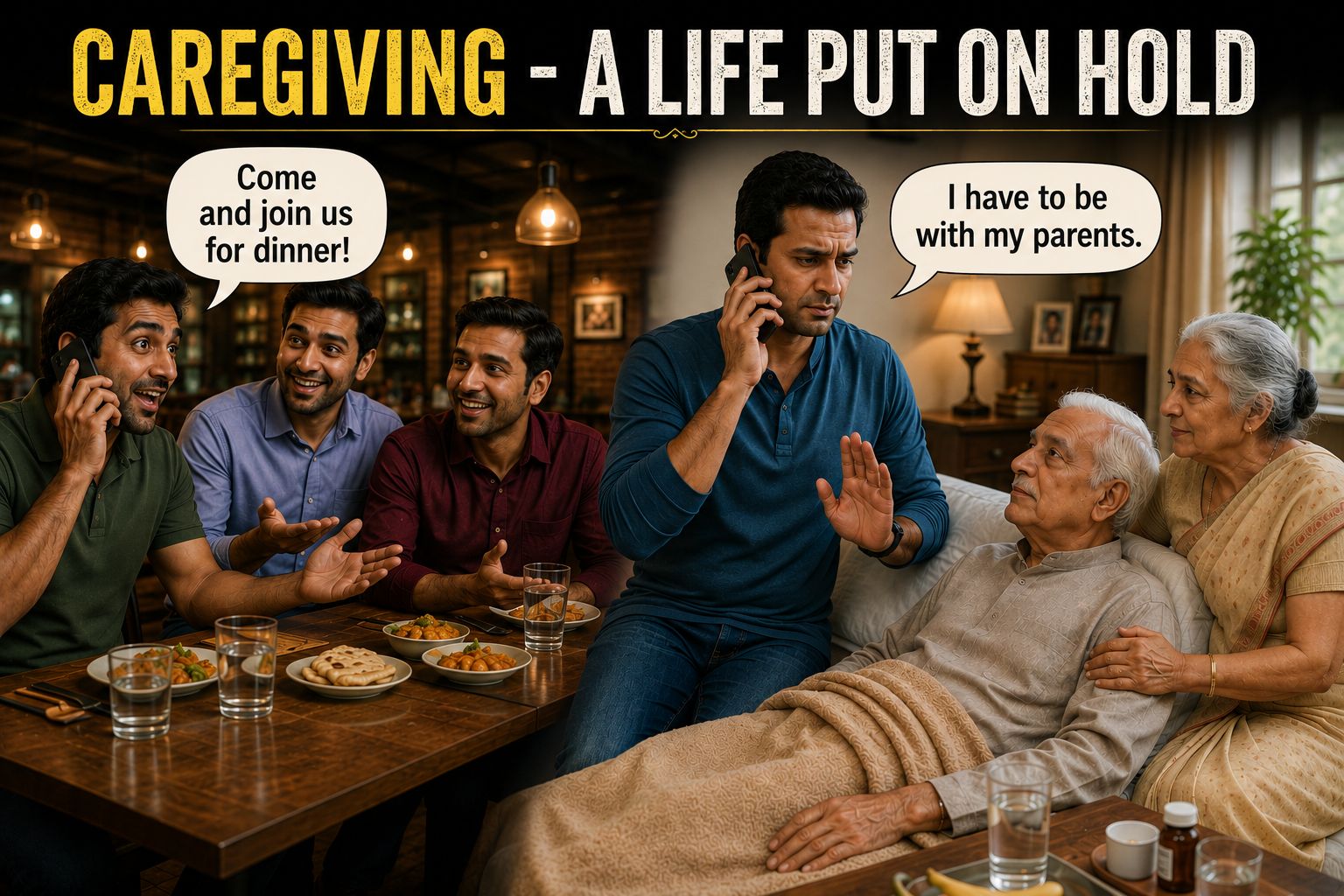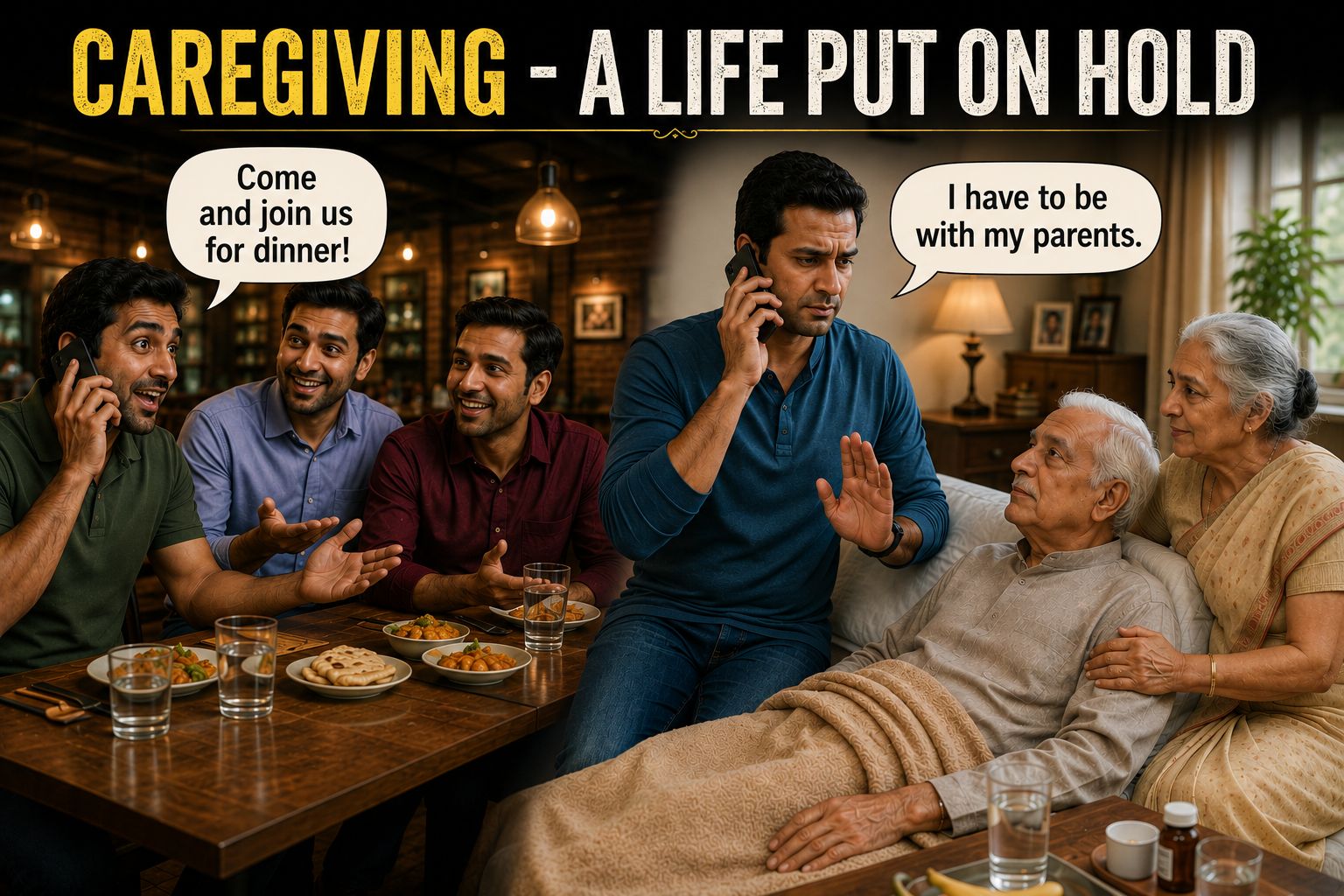
Caregiving is a combination of art and science; sometimes it is the soft skills which work and at times it's like an arithmetic equation.
The larger point of debate is, what happens to the mental and physical health of the caregivers who are completely engaged in taking care of parents or older people on a 24x7 basis? What is the break even point for a caregiver to become indifferent and unconcerned about the caregiver duties?
There are many Caregivers who are not been able to go for a holiday or take a break for months, probably because it's the guilt of leaving the loved ones alone or lack of qualified and affordable alternative support.
For a Caregiver, life is put on hold especially for the family Caregivers that too for infinity. For many Caregivers life comes to a standstill not because they don't have the desire to live their own dreams but it's the circumstances and the sense of responsibility, empathy and mindset which holds them from crossing the bridge.
India as a country is still lucky in terms of the family caregiving ecosystem, we still have family members who are there to take care of us, but then, this equation will drastically change in the next 15 years.
Once the children fly away and the cuckoos nest becomes empty, that is the time most senior citizens will be dependent upon private sector service providers, and to be honest many of us will not be able to afford the Care services.
What will happen to the burgeoning population of single older people who won't have the purchasing capacity yet requiring support and care services? Will they have to hope for some external intervention or struggle alone in their own house without anyone realising that they have been gone for a month?
Eldercare is not an individual or a single family issue, it's going to become a national priority because by 2050 one in five people will be a senior citizen, which basically means 20% of the social welfare schemes and budget will have to be focused towards Senior Citizens Care.
Pankaj Mehrotra
Founder - Elderly Care India